Views: 396 Author: Site Editor Publish Time: 2025-01-17 Origin: Site


The age-old practice of saving money in a piggy bank has been a rite of passage for many individuals around the world. From the ceramic pigs of yesteryears to the modern digital variants, piggy banks have evolved but their core purpose remains the same: to encourage saving. But in today's complex financial landscape, one might wonder, should I keep money in a piggy bank? This article delves into the advantages and disadvantages of using piggy banks as a savings tool, examining their relevance in contemporary society.
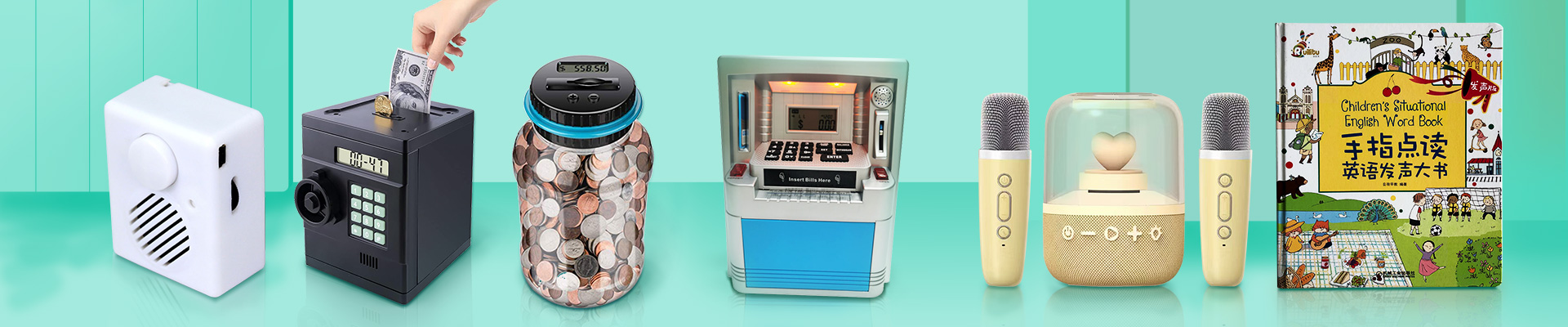
While exploring this topic, it's essential to consider innovative financial tools that complement traditional methods. Devices like the Toy Recorder offer interactive ways to engage with money-saving practices, especially for younger users.
Piggy banks have a rich history dating back to the Middle Ages. The term \"piggy bank\" originates from \"pygg,\" a type of clay used in England to make household jars and pots. Over time, these pygg pots were fashioned into pig shapes, and the name stuck. Culturally, piggy banks symbolize wealth accumulation and financial responsibility. In countries like Japan, the Maneki-neko (beckoning cat) serves a similar purpose, representing luck and prosperity.
The piggy bank has transcended its role as a mere container for coins. It has become an educational tool, teaching children the value of money and the importance of saving. This cultural symbol persists even as digital transactions become more prevalent, highlighting the enduring importance of tangible saving methods.
Using a piggy bank offers several benefits, particularly for young savers and those looking to instill financial discipline:
The physical act of inserting coins or bills into a piggy bank provides a sensory experience that digital transactions cannot replicate. This tangibility makes saving more relatable and can reinforce positive financial habits.
For children, piggy banks serve as an introductory tool to the concepts of saving and delayed gratification. By accumulating coins over time, young savers learn the value of patience and the rewards of consistent saving efforts.
Piggy banks make it easy to save small amounts of money that might otherwise be overlooked. Spare change from daily transactions can accumulate significantly over time, contributing to larger savings goals without substantial effort.
Despite their benefits, piggy banks also have notable drawbacks that may affect their practicality in modern financial management:
Money stored in a piggy bank does not earn interest. Unlike savings accounts, which offer returns on deposited funds, piggy banks merely hold cash, potentially resulting in lost earning opportunities over time.
Physical money is susceptible to theft, loss, and damage. In the event of a fire, burglary, or other mishap, the savings within a piggy bank could be irretrievably lost, whereas bank deposits are generally insured and protected.
Piggy banks do not provide easy tracking of savings or expenditure. Without statements or digital records, it can be challenging to monitor savings progress or plan for financial goals effectively.
Modern financial tools offer alternatives that address some limitations associated with traditional piggy banks:
Bank savings accounts provide a secure place to store money while earning interest. They offer accessibility and financial services that support goal-oriented saving and budgeting.
Financial technology has introduced digital apps that mimic the experience of a piggy bank. These platforms allow users to save virtually, set financial goals, and track progress with ease.
For those looking to grow their savings, investment accounts offer opportunities to earn higher returns. While they come with risks, they can be a viable option for long-term financial growth.
Saving money is not just a financial act but also a psychological one. The use of piggy banks can influence saving behaviors through visual and tactile stimuli.
Researchers have found that physical representations of savings, such as coins accumulating in a piggy bank, can motivate individuals to save more. The satisfaction derived from seeing savings grow can reinforce positive financial habits.
Introducing children to piggy banks is an effective way to teach them about money management. It lays the foundation for financial literacy by providing practical experience with saving and goal setting.
Parents and educators often use piggy banks alongside other educational tools to enhance learning. Incorporating devices like a Toy Recorder can make the process more engaging, combining play with education.
The traditional piggy bank has evolved with technological advancements. Today's options include digital piggy banks that count coins electronically, smart banks connected to apps, and interactive designs that encourage saving through gamification.
Products like the Toy Recorder exemplify this innovation. These devices not only store money but also provide interactive features that can record messages or play sounds, making the act of saving more enjoyable.
Such innovations aim to keep the concept of piggy banks relevant in a digital age, merging traditional saving practices with contemporary technology to enhance user experience.
Deciding whether to keep money in a piggy bank depends on individual financial goals and circumstances. While piggy banks offer tangible benefits, especially for young savers, they also come with limitations in security and financial growth potential.
Integrating modern tools like the Toy Recorder can enhance the traditional experience, making saving more interactive and engaging. Ultimately, a combination of traditional practices and modern financial solutions may provide a balanced approach to effective money management.