Views: 463 Author: Site Editor Publish Time: 2025-03-14 Origin: Site


Piggy banks have long been a traditional tool for teaching children about the value of saving money. These cherished items come in various shapes, sizes, and designs, captivating the imagination of young savers. But a common question arises: How much money can a piggy bank actually hold? Understanding the capacity of piggy banks not only satisfies curiosity but also aids in setting realistic savings goals. This article delves into the factors that determine the holding capacity of piggy banks and explores their significance in financial education for children.
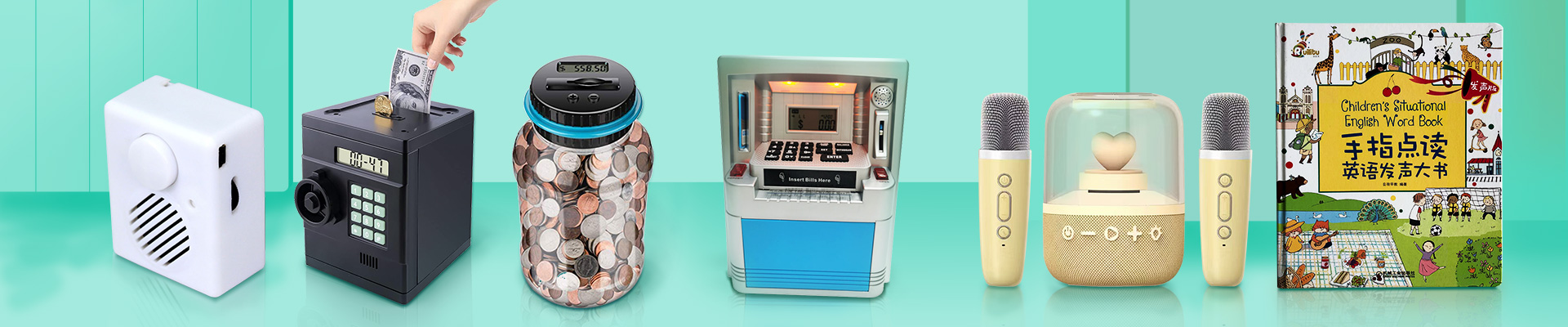
One popular choice among parents is the boys money jar, which not only serves as a saving vessel but also as an educational tool by incorporating digital counting features. Such innovations have modernized the traditional piggy bank, making saving money an interactive and engaging experience for children.
The concept of the piggy bank dates back to the Middle Ages, originating from the use of "pygg," a type of clay used to make jars and pots for storing money. Over time, the term evolved into "piggy bank," and the containers began to take on the shape of pigs. This design choice not only played on the word "pygg" but also symbolized wealth and prosperity in various cultures. Today, piggy banks come in countless forms, materials, and technologies, reflecting changes in society and advancements in manufacturing.
The material and design of a piggy bank significantly affect its capacity. Traditional ceramic piggy banks are often solid with a slot for coins, lacking an easy method for retrieval other than breaking them open. Modern designs utilize plastic, metal, and even electronic components, offering features like counters and locks.
For instance, metal piggy banks tend to be more durable and can be crafted into larger sizes without risking structural integrity. Plastic piggy banks offer versatility in shapes and interactive features, such as digital displays and sound modules. Designs that mimic everyday objects, like a toy ATM money bank, can influence how much money they hold due to their functional components taking up internal space.
To determine how much money a piggy bank can hold, one must consider its internal volume and the size and denomination of the coins or bills being saved. The calculation involves measuring the internal dimensions to find the volume in cubic centimeters or inches and then estimating how many coins or bills can fit into that space.
For example, a standard U.S. penny has a volume of approximately 0.36 cubic centimeters. If a piggy bank has an internal volume of 1,800 cubic centimeters, it can theoretically hold up to 5,000 pennies, totaling $50. However, in practice, the irregular shapes of coins and void spaces between them reduce the actual capacity by about 30%. Therefore, the piggy bank might realistically hold around $35 in pennies.
Several factors influence how much money a piggy bank can hold:
Larger piggy banks naturally hold more money due to increased volume. The shape also matters; spherical designs tend to have more internal space compared to intricate shapes with more material and less hollow space.
Coins occupy more space relative to their monetary value compared to bills. A piggy bank designed to accept folded bills can accumulate a higher monetary amount in the same volume. Some modern piggy banks accommodate both, optimizing the saving potential.
Additional features like digital counters, electronic locks, or sound modules can reduce internal space. For instance, a digital coin counting bank may have components that take up space which could otherwise store money.
Consider the digital coin counting banks with an LCD counter and a capacity of 1.8 liters. These banks can hold a significant number of coins. Assuming mixed coin denominations and considering space inefficiency due to coin shapes, such a bank might hold approximately $150 to $200 before reaching capacity.
Another example is the oversized novelty piggy banks available in the market. With capacities exceeding 5 liters, these can hold over $500 in coins and bills combined, serving not just as savings tools but also as decorative pieces that encourage substantial saving habits.
Piggy banks play a crucial role in teaching children about money management. The act of physically placing money into a container helps reinforce the concept of saving. When using interactive piggy banks like the boys money jar, children receive immediate feedback on their progress, which can be highly motivating.
Moreover, understanding the capacity of their piggy bank allows children to set tangible goals. If they know their bank can hold $100, they can aim to fill it up, teaching them patience and the rewards of delayed gratification.
The size of a piggy bank can psychologically influence saving habits. Larger piggy banks may encourage more saving by providing a visible reminder of one's goals. Conversely, smaller piggy banks are less intimidating for younger children just starting to learn about money.
Interactive features, such as sound effects or digital counters, can enhance engagement. For example, a piggy bank that plays a sound when a coin is inserted can provide positive reinforcement, making the saving process enjoyable.
Technology has transformed the simple piggy bank into a sophisticated financial tool. Features like coin recognition, electronic balances, and even connectivity to smartphone apps have modernized saving. These advancements allow for better tracking of savings and can introduce children to basic financial literacy concepts.
For instance, the integration of digital displays can show real-time totals, helping children understand the accumulation of their savings. This immediate feedback can be more effective than traditional methods, sustaining their interest over time.
Piggy banks are used worldwide, but their designs and the customs surrounding them can vary significantly. In some cultures, piggy banks are gifted during festivals or as symbols of good luck. The capacity and design may reflect these cultural values, influencing how much money they are intended to hold.
Understanding these differences can provide insights into global saving habits and the educational approaches used to teach financial responsibility to children across different societies.
To make the most out of a piggy bank, consider the following tips:
Encourage consistent saving by setting a routine. Whether it's daily pocket change or a portion of an allowance, regular deposits help build the habit of saving.
Define a clear savings goal. Knowing what they are saving for can motivate children to fill their piggy banks. Visual aids, like a thermometer chart, can track progress toward their target amount.
Select a piggy bank that aligns with the saver’s age and interests. Younger children might prefer interactive models like the boys money jar, while older kids may appreciate larger banks that can hold more substantial amounts.
While piggy banks are excellent tools for encouraging saving, they come with limitations. Physical money stored at home doesn't earn interest, and there's a risk of loss or damage. As children grow, introducing them to bank accounts can complement the lessons learned from using piggy banks.
Moreover, the shift toward digital transactions means less cash on hand for many households. Adapting piggy banks to accept digital contributions is a developing area, with some products now featuring connectivity to online accounts.
The amount of money a piggy bank can hold varies widely based on size, design, and functionality. Understanding these factors helps in selecting the appropriate piggy bank to meet specific saving goals. Piggy banks like the boys money jar combine traditional saving methods with modern technology, enhancing the educational experience for children.
Ultimately, the value of a piggy bank extends beyond its physical capacity. It serves as a foundational tool in teaching financial responsibility, goal setting, and the rewards of consistent saving habits. As technology and designs evolve, piggy banks remain a relevant and cherished means of introducing the principles of money management to the younger generation.